



How to Build Memory-Powered Agentic AI That Learns Continuously Through Episodic Experiences and Semantic Patterns for Long-Term Autonomy

In this tutorial, we explore how to build agentic systems that think beyond a single interaction by utilizing memory as a core capability. We walk through how we design episodic memory to store experiences and semantic memory to capture long-term patterns, allowing the agent to evolve its behaviour over multiple sessions. As we implement planning,…

Read More

Comparing the Top 5 AI Agent Architectures in 2025: Hierarchical, Swarm, Meta Learning, Modular, Evolutionary

In 2025, ‘building an AI agent’ mostly means choosing an agent architecture: how perception, memory, learning, planning, and action are organized and coordinated. This comparison article looks at 5 concrete architectures: Hierarchical Cognitive Agent Swarm Intelligence Agent Meta Learning Agent Self Organizing Modular Agent Evolutionary Curriculum Agent Comparison of the 5 architectures Architecture Control topology…

Read More

How to Design a Fully Interactive, Reactive, and Dynamic Terminal-Based Data Dashboard Using Textual?

In this tutorial, we build an advanced interactive dashboard using Textual, and we explore how terminal-first UI frameworks can feel as expressive and dynamic as modern web dashboards. As we write and run each snippet, we actively construct the interface piece by piece, widgets, layouts, reactive state, and event flows, so we can see how…

Read More

OpenAI Researchers Train Weight Sparse Transformers to Expose Interpretable Circuits

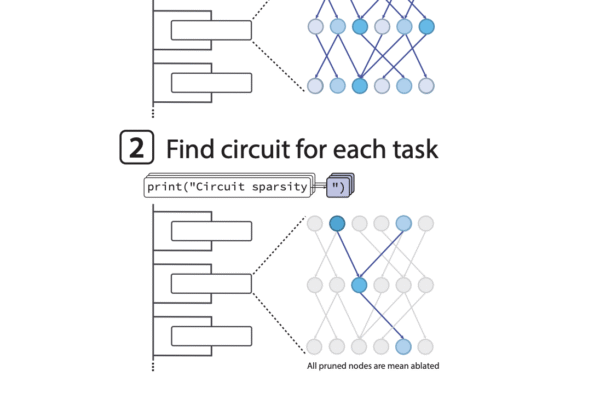
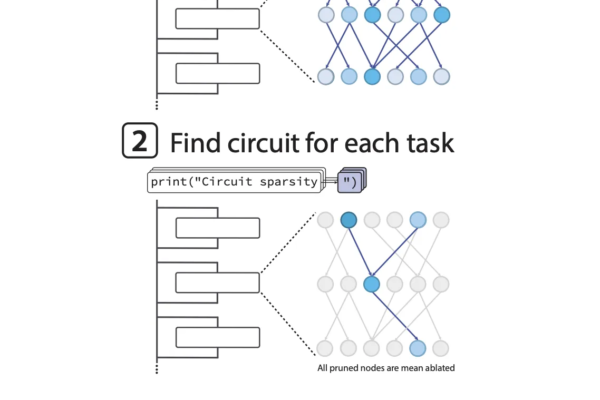
If neural networks are now making decisions everywhere from code editors to safety systems, how can we actually see the specific circuits inside that drive each behavior? OpenAI has introduced a new mechanistic interpretability research study that trains language models to use sparse internal wiring, so that model behavior can be explained using small, explicit…

Read More

Comparing the Top 6 Agent-Native Rails for the Agentic Internet: MCP, A2A, AP2, ACP, x402, and Kite

As AI agents move from single-app copilots to autonomous systems that browse, transact, and coordinate with each other, a new infrastructure layer is emerging underneath them. This article compares six key “agent-native rails” — MCP, A2A, AP2, ACP, x402, and Kite — focusing on how they standardize tool access, inter-agent communication, payment authorization, and settlement,…

Read More

How to Design an Advanced Multi-Agent Reasoning System with spaCy Featuring Planning, Reflection, Memory, and Knowledge Graphs

In this tutorial, we build an advanced Agentic AI system using spaCy, designed to allow multiple intelligent agents to reason, collaborate, reflect, and learn from experience. We work through the entire pipeline step by step, observing how each agent processes tasks using planning, memory, communication, and semantic reasoning. By the end, we see how the…

Read More

NVIDIA AI Introduces TiDAR: A Hybrid Diffusion Autoregressive Architecture For High Throughput LLM Inference

How far can we push large language model speed by reusing “free” GPU compute, without giving up autoregressive level output quality? NVIDIA researchers propose TiDAR, a sequence level hybrid language model that drafts tokens with diffusion and samples them autoregressively in a single forward pass. The main goal of this research is to reach autoregressive…

Read More

Meet SDialog: An Open-Source Python Toolkit for Building, Simulating, and Evaluating LLM-based Conversational Agents End-to-End

How can developers reliably generate, control, and inspect large volumes of realistic dialogue data without building a custom simulation stack every time? Meet SDialog, an open sourced Python toolkit for synthetic dialogue generation, evaluation, and interpretability that targets the full conversational pipeline from agent definition to analysis. It standardizes how a Dialog is represented and…

Read More

How Powerful are Diffusion LLMs? Rethinking Generation with Any-Process Masked Diffusion Models

How powerful are Diffusion LLMs compared to classic autoregressive LLMs, once you treat generation as an algorithm with time and space complexity, not just as a decoding trick? A new research paper from a team researchers from Toyota Technological Institute at Chicago and MIT gives a formal answer. This new research compares Auto-Regressive Models (ARM),…

Read More